
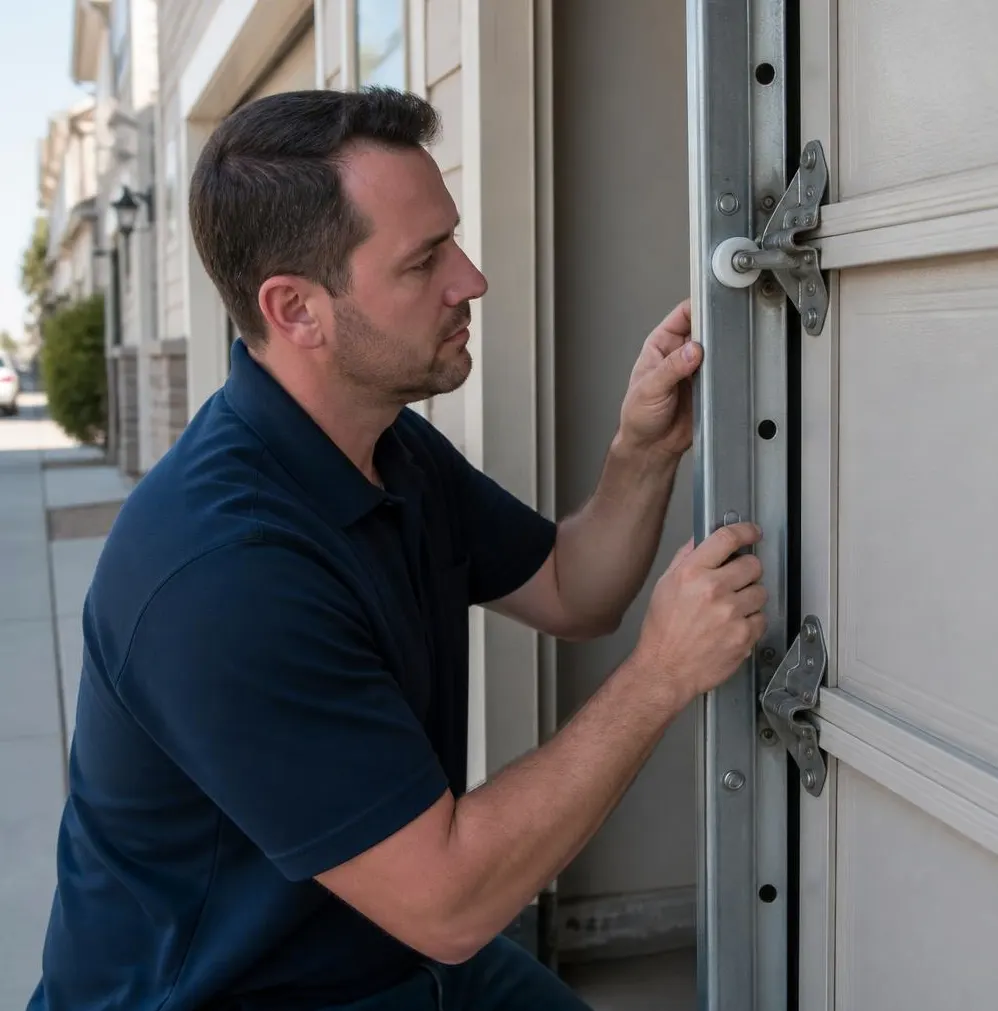
What a Technician Sees This Time of Year
By late October, service calls around Alpharetta start to follow a pattern. A homeowner notices the garage door is suddenly noisier, or it struggles to open on a cold morning, or there's a thin line of daylight under the door that wasn't there in August. Nine times out of ten, it's the same culprits: weatherstripping that baked and cracked all summer, springs that tightened up with the first real cold snap, and tracks carrying months of pollen grit and humidity residue that turned into light rust. None of this is dramatic, but if it's ignored until an ice storm hits, a minor fix turns into an emergency call.
Why Fall Prep Matters Here
North Metro Atlanta doesn't get brutal winters, but it gets erratic ones. Warm, humid days can swing into a hard freeze within 48 hours, and the area sees occasional ice storms that put real stress on anything mechanical sitting in an unheated garage. Add in the pine debris and moisture that build up around garages all year, and you've got a door system that's been quietly wearing down since spring. Getting ahead of it now, before the first freeze, is cheaper and easier than dealing with a stuck door on an icy morning.
Check the Weatherstripping and Bottom Seal
The rubber seal along the bottom of the door and the weatherstripping around the frame take a beating from UV exposure and heat all summer. By fall, it's common to find it cracked, flattened, or pulling away from the track.
- Run a hand along the bottom seal — if it's stiff, cracked, or doesn't spring back after you press it, it needs replacing.
- Check for daylight gaps along the sides and top when the door is closed; those gaps let in cold air, moisture, and pests.
- Replacement seal kits are inexpensive (typically $20–$50 for materials) and are one of the best returns on time you'll get before winter.
Understand How Cold Affects Your Springs
Metal contracts in the cold, and garage door springs are no exception. A spring that's been doing its job fine all summer can feel noticeably tighter or behave differently once temperatures drop into the 30s and 40s. You might notice:
- The door feels heavier when opening manually or the opener strains more than usual.
- A door that used to close smoothly now jerks or hesitates partway down.
- Increased noise — creaking or popping — as the metal adjusts to temperature swings.
This isn't something to fix yourself. Springs are under extreme tension, and a snapped spring can cause serious injury. If you're noticing a change in how the door moves as the weather cools, that's the signal to get it inspected before it fails outright, which tends to happen suddenly and often at the worst possible time.
Why Spring Failures Spike in Winter
Springs are rated for a certain number of open-close cycles, and cold weather accelerates metal fatigue. Combine that with a spring that was already near the end of its life from a hot, humid summer, and winter is when a lot of springs finally give out. A proactive spring replacement in the fall is far less disruptive than an emergency one in January.
Service the Opener and Sensors
Garage door openers rely on safety sensors mounted low on each side of the track, and those sensors accumulate pollen film and moisture haze over the course of a humid Georgia summer. Going into winter, give them attention:
- Wipe both sensor lenses with a soft, dry cloth — a hazy sensor can cause the door to reverse unexpectedly or refuse to close.
- Check that the sensors are still aligned; a bumped sensor (common if anyone's stored bikes or lawn equipment nearby) will throw off the safety reverse feature.
- Test the manual release mechanism now, while it's easy, rather than discovering it's stuck during a power outage from an ice storm.
- If you rely on a battery backup for your opener, this is a good time to check the battery's condition before winter storms knock out power.
Protect Metal Parts From Rust and Moisture
Heavy rain, humidity, and condensation are a year-round reality for garages in this part of Georgia, and they don't stop in winter — they just get colder. Rust on tracks, rollers, and hinges is one of the most common issues technicians find on older doors, especially ones facing a shaded or poorly ventilated side of the house.
- Inspect tracks and hardware for surface rust or pitting; a light coat of silicone-based lubricant (not WD-40, which attracts grit) on rollers, hinges, and the torsion spring helps protect against moisture.
- Clear pine needles and debris from the track and weep holes at the base of the door — clogged drainage can let water pool and freeze against the bottom seal.
- If your garage floor tends to get damp, consider a dehumidifier or better ventilation; standing moisture against steel panels is what eventually leads to rust-through.
When to Call Alpharetta Garage Door Pro
If your door is sticking, making new noises as the temperature drops, or the sensors seem unreliable, don't wait for the first hard freeze to find out how bad it's gotten. Our Garage Door Maintenance visits cover exactly this kind of fall tune-up — seals, hardware, lubrication, and a full spring inspection — so small issues get caught before they become a stuck door during an ice storm. And if a spring is already showing signs of fatigue, our Spring Replacement service gets it handled safely on your schedule instead of as an emergency.
If you're in Alpharetta, Roswell, Johns Creek, Milton, Cumming, Duluth, Suwanee, or Norcross and want your garage door ready for winter, give Alpharetta Garage Door Pro a call today — we'll get it sorted before the cold really sets in.