
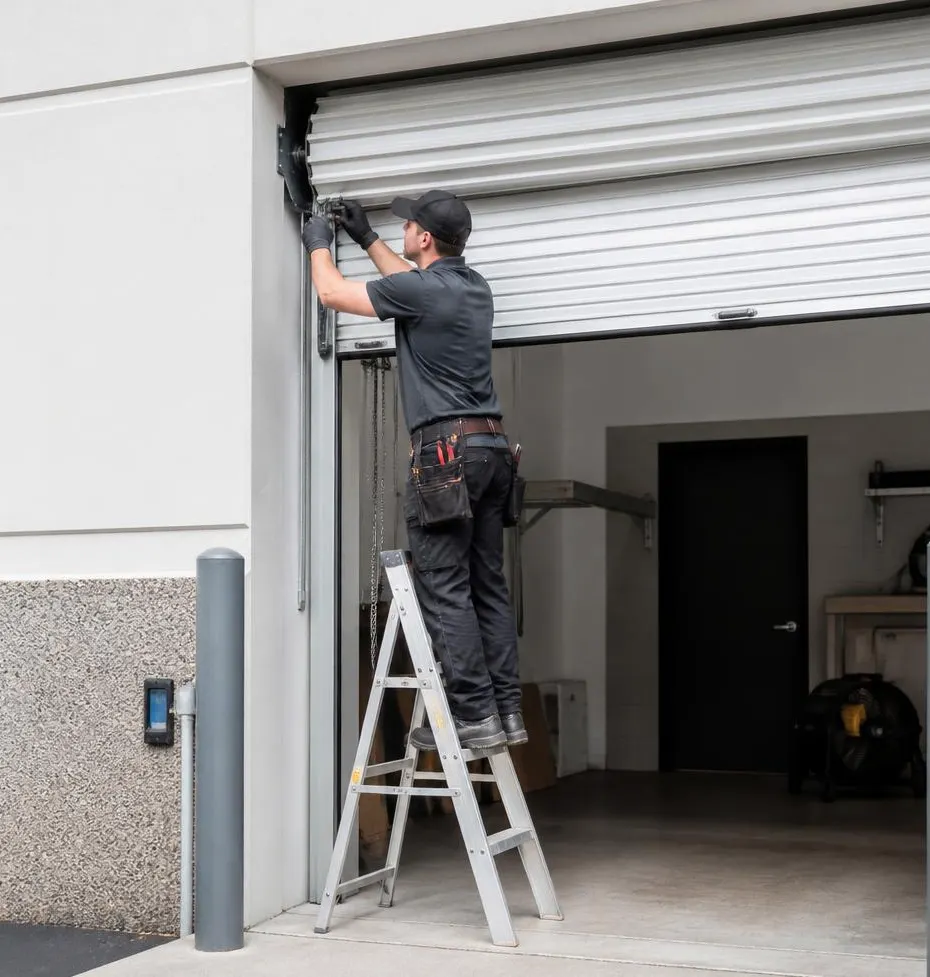
Yes, Your Garage Door Is Probably the Weakest Point in Your Home's Envelope
In most houses, the garage door is the single largest opening in the exterior wall, and it's built with lighter materials and more moving parts than the wall around it. When wind pressure builds against a house, that door is usually the first thing to buckle, bow, or blow in. Once it fails, wind rushes into the garage and pushes up against the roof from underneath, which is how a storm event turns into a roof or structural problem. Fall in north metro Atlanta brings exactly the kind of weather that tests this: remnants of hurricanes tracking inland, heavy rain bands, and gusty fronts that can rattle a door that seemed fine all summer.
Why Garage Doors Fail in Wind
It's rarely one dramatic gust that does it. It's usually a combination of small weaknesses that wind exposes all at once.
- Surface area: A standard double garage door has enough square footage that even moderate sustained wind creates real pressure on the panels, track, and rollers.
- Track and roller wear: Tracks that have loosened over time, or rollers worn from humidity and years of use, let the door flex more than it should under pressure.
- Hardware fatigue: Hinges, end stiles, and the struts behind the panels are what actually resist wind load. If these are thin, rusted, or loose, the door has little real reinforcement even if it looks fine from the driveway.
- Non-wind-rated doors: Many standard residential doors were never engineered for wind load at all. They're built for weather resistance and insulation, not for resisting lateral pressure during a storm.
What Fall and Early Winter Bring to This Part of Georgia
The storm risk here isn't limited to summer thunderstorms. Fall is when inland remnants of tropical systems often move through north Georgia, bringing heavy rain and sustained wind rather than a single violent event. That sustained pressure is actually harder on a weak door than a short gust, because it keeps stressing the same hinges and rollers for hours. Add in the humidity and moisture that linger around garages shaded by pine trees, and you get steady corrosion on hardware that's already working harder than it should. Later in the season, occasional ice storms can glaze tracks and openers, which is a separate problem but one worth watching for once temperatures start dropping.
How to Check Your Door Before the Next Storm Rolls Through
Look and Listen
- Open and close the door manually (release the opener first) and watch for wobble, binding, or a track that visibly moves away from the wall.
- Check rollers for cracking, flat spots, or rust — these are common after a humid summer and heavy rain.
- Inspect hinges and the strut bars on the back of the panels for rust, looseness, or bent metal.
Test the Hardware
- Push firmly on the center of a closed panel. Excessive flex suggests the panel or reinforcement isn't holding up its share of the load.
- Check that the bottom weatherstripping seals fully against the slab — gaps let wind-driven rain in and are often a sign the door isn't sitting evenly in the track.
- Have the spring tension checked. An unbalanced door puts uneven stress on the opener and track exactly when you need both to perform well.
Think About Backup Power
Heavy fall storms often bring power outages along with wind. If your opener doesn't have battery backup, a power loss during a storm means manually releasing and securing the door, which is harder to do safely once wind picks up. This is worth addressing before the next major front comes through, not during it.
Reinforce or Replace: The Real Trade-off
Reinforcing an existing door with bracing kits and upgraded hardware is the lower-cost option and can meaningfully improve wind resistance on a door that's otherwise in decent shape. Full replacement with a wind-rated door is a bigger investment, generally running from a few hundred dollars for basic upgrades to several thousand for a new wind-rated installation, depending on size, materials, and insulation — but it's the right call if your current door already shows significant wear, rust, or a history of coming off track. Bracing a door that's structurally tired just delays the same failure.
When to Call Alpharetta Garage Door Pro
If your door wobbles, the rollers look rough, or you've never had the hardware inspected since it was installed, that's worth a visit before storm season peaks rather than after a door fails mid-storm. Our Garage Door Maintenance service covers exactly this: checking tracks, rollers, hinges, spring balance, and weatherstripping, then tightening or replacing what's worn before wind turns a minor issue into a blown-in panel. If a storm has already caused damage, or your opener has lost power and the door won't release safely, our Emergency Garage Door Service gets a tech out to secure the door and get it operating safely again.
If you're in Alpharetta, Roswell, Johns Creek, Milton, Cumming, Duluth, Suwanee, or Norcross and want your garage door checked before the next storm front moves through, call Alpharetta Garage Door Pro today to schedule a maintenance visit.